Compliant Healthcare Laundry Service for Hospitals in Ohio, Indiana and Kentucky
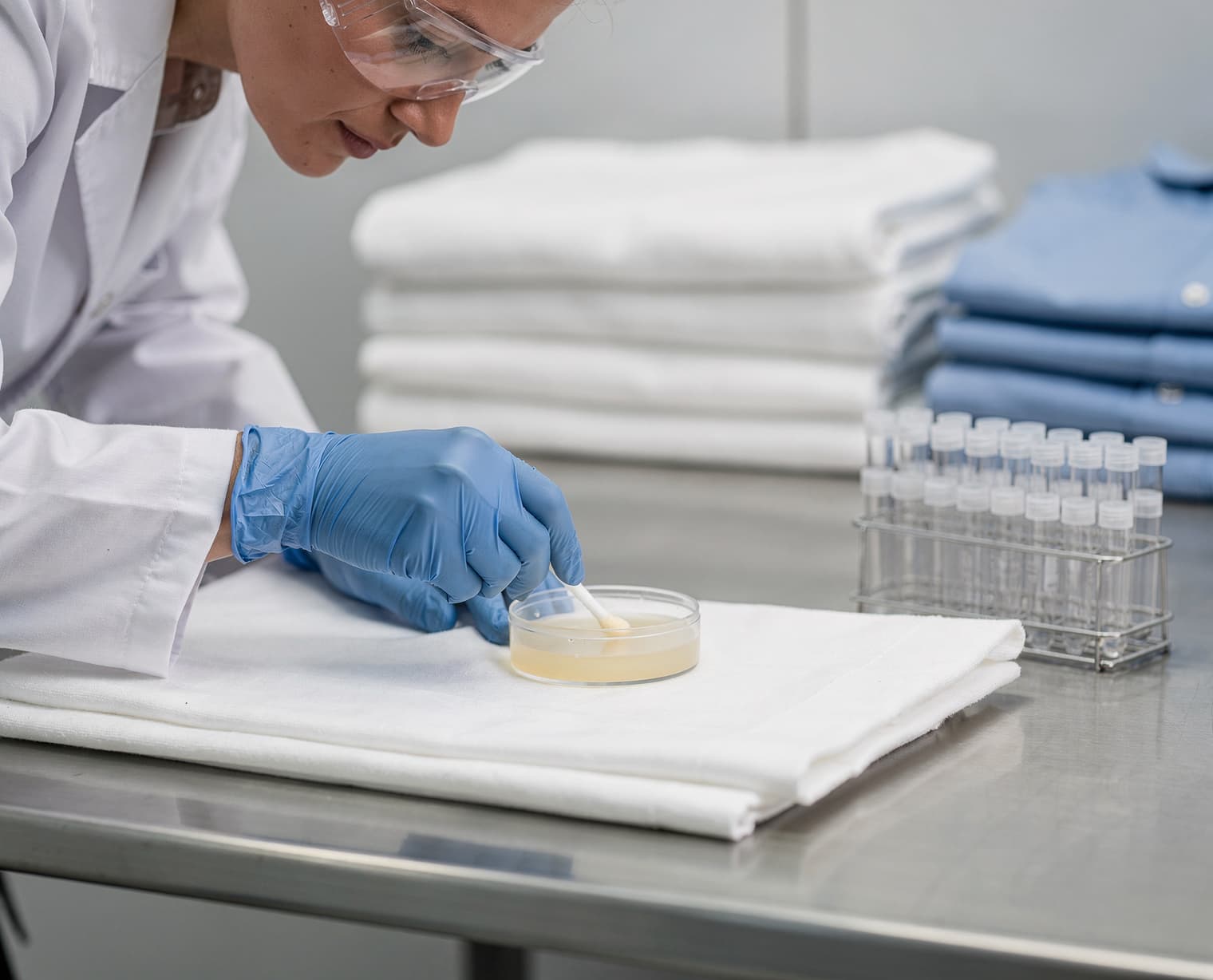
Table of contents
- Rules versus credentials: what each hospital laundry standard actually checks
- How our hospital laundry meets OSHA's Bloodborne Pathogens Standard, control by control
- The third-party testing behind "hygienically clean"
- Inside the plant, in brief
- What your compliance file from Economy Linen contains
- Where we provide healthcare laundry service to hospitals
- Frequently asked questions
- Request the compliance file or a plant tour
Economy Linen and Towel Service is a family-owned healthcare laundry service for hospitals and health systems in Ohio, Indiana and Northern Kentucky. Our hospital linen operation has been HLAC accredited since 2007, both of our production plants hold TRSA Hygienically Clean Healthcare certification backed by quarterly independent microbial testing, and we handle soiled linen under the procedures OSHA's Bloodborne Pathogens Standard (29 CFR 1910.1030) requires. Hospital linen is processed at our accredited production facilities, including our Zanesville, Ohio plant, which has served large medical facilities exclusively since 1990, and delivered from Dayton and from distribution centers in Cincinnati, Columbus and Indianapolis.
Every laundry says it is compliant. The difference between a claim and a compliant hospital laundry is paperwork: a certificate that names the plant, a lab report with a date on it, and a written soiled-linen procedure your infection preventionist can file. This page sets out what each of our credentials proves, how it is tested, and what you receive from us before an infection-control review or a Joint Commission or CMS survey. It is written for hospitals and health systems; if you run a clinic or practice, our medical linen vendor checklist for clinics is the better starting point.
Rules versus credentials: what each hospital laundry standard actually checks
Healthcare laundry pages usually cite the same four standards. Two of them are rules you and your laundry must follow. The other two are voluntary credentials a laundry earns, plant by plant, to prove it follows them. Keeping the distinction straight matters, because a vendor that blurs it (for example, by calling itself "OSHA certified") is telling you something about how carefully it reads the standards.
| Standard or credential | What it is | Who checks it | How often | Economy Linen status |
|---|---|---|---|---|
| OSHA 29 CFR 1910.1030, Bloodborne Pathogens Standard | Federal worker-safety law. Governs how contaminated laundry is bagged, labeled, transported and handled, and requires an exposure control plan, PPE, training and hepatitis B vaccination for exposed staff. | OSHA. OSHA does not certify laundries. | Continuous legal obligation; enforced by OSHA. | Our handling procedures are written to the standard and audited for OSHA compliance in our HLAC and TRSA inspections (controls listed below). No certificate exists for this, and we do not claim one. |
| CDC Guidelines for Environmental Infection Control, laundry and bedding | Federal guidance (CDC/HICPAC) on functional separation, negative air pressure in the soiled area, wash parameters and protection of clean textiles in transport and storage. | Your infection-control program and accreditation surveyors, who use it as the reference. | Referenced at every survey; no certificate issued. | Built into the HLAC and TRSA standards we are inspected against; see plant controls below. |
| HLAC accreditation | Voluntary, per-facility accreditation covering the full cycle from soiled pickup to clean delivery: facility layout, policies, training, OSHA and CDC conformance. | Healthcare Laundry Accreditation Council, an independent nonprofit, through an on-site inspector. | Three-year term with surveillance; renewal inspection before expiry. | Hospital linen operation accredited since 2007 and maintained on HLAC's three-year renewal cycle. Current certificate naming the plant available on request. |
| TRSA Hygienically Clean Healthcare | Voluntary, per-facility certification combining a third-party audit of best management practices with laboratory testing of finished textiles. | TRSA auditor plus a TRSA-approved laboratory accredited under the ILAC MRA (for example, A2LA or IAS). | Three-year term; quarterly microbial testing required to maintain it. | Both production plants certified; quarterly test results for the plant serving you available on request. |
Our certifications page shows the badges, including TRSA Clean Green for the environmental side of the same plants. The rest of this page explains what sits behind them.
How our hospital laundry meets OSHA's Bloodborne Pathogens Standard, control by control
OSHA "does not test, approve, certify, or endorse any equipment, product, or procedure," as the agency put it in a 2005 letter of interpretation, which means no laundry can be OSHA certified. What OSHA does is enforce 29 CFR 1910.1030, which treats laundry soiled with blood or other potentially infectious materials as "contaminated laundry" and sets specific handling rules in paragraph (d)(4)(iv). Here is each control the rule imposes, and how it is met in our hospital linen program, where every item below is written into the procedures our HLAC and TRSA auditors inspect.
- Minimal handling, minimal agitation. The standard requires contaminated laundry to be "handled as little as possible with a minimum of agitation." Bags stay closed until they reach the barrier-separated soil-sort area at the plant; linen is not shaken or pre-sorted anywhere else.
- Bagged where it was used, never sorted or rinsed on your unit. Soiled linen is bagged or containerized at the point of use, and nothing is opened or re-sorted on your premises or on the truck. The bagging procedure for your floor staff is part of the compliance file described below.
- Labeled or color-coded containers. Contaminated laundry travels in bags or carts labeled or color-coded under paragraph (g)(1)(i). If your facility applies universal precautions to all soiled laundry, the standard allows an alternative marking system; the convention in use is agreed with your infection-control team when the program is set up.
- Leak-proof containment when wet. Linen likely to soak through is placed in bags or containers that prevent leakage to the exterior, consistent with HLAC's requirement for fluid-resistant, leak-proof containers from pickup to plant.
- Clean and soiled kept apart in transit. When a vehicle carries both streams, soiled and clean linen are functionally separated by barriers or space so clean goods arrive protected, in line with CDC guidance on packaging and transport of clean textiles.
- PPE for anyone touching soiled linen. Employees who contact contaminated laundry wear gloves and other appropriate protective equipment, with handwashing available in the soil-sort area. The TRSA audit specifically confirms that employees are properly trained and protected.
- Exposure control plan, training and vaccination. The standard requires every employer with exposed staff to keep a written exposure control plan, train on it, and offer hepatitis B vaccination. Those obligations apply to our soil-sort and driver roles, and our compliance with OSHA regulations is one of the four best-management-practice areas the TRSA audit checks.
HLAC's standards are designed around the same federal regulations and guidelines, and its inspection covers the cycle from soiled handling and transport through in-plant processing. That is why the accreditation, rather than our own assurance, is the document to file.
The third-party testing behind "hygienically clean"
Under TRSA's Hygienically Clean Healthcare program, finished textiles from each certified plant are sampled and sent, with a chain-of-custody form, to a TRSA-approved laboratory accredited for microbiological testing under the ILAC Mutual Recognition Arrangement or by a federal or state agency. The laundry does not choose its own results.
Two methods are used. RODAC contact plates press directly on the finished textile to count the total aerobic microbial count and the yeast and mold count; the pass limit is no more than 20 colony-forming units per square decimeter for aerobic bacteria and no more than 50 for yeast and mold. USP 62 is a pathogen screen that passes only when specified organisms are absent. TRSA requires quarterly RODAC testing and semi-annual USP 62 testing to keep the certification, and a plant must pass two consecutive rounds before it is certified in the first place.
Economy Linen's hospital linen is tested quarterly by an independent accredited laboratory using RODAC contact plates against that 20 CFU per square decimeter limit, with USP 62 pathogen screening twice a year, as required to hold TRSA Hygienically Clean Healthcare certification at both of our production plants. A hospital we serve can request the most recent results for the plant that processes its linen.
Worth knowing: the CDC states that routine microbiologic sampling of clean textiles is not required and is reserved for outbreak investigations. TRSA testing goes beyond that baseline. It exists so you have a number on file before anyone asks for one.
Inside the plant, in brief
Our Columbus page walks through the six-step HLAC process from pickup to delivery in detail, so here is the summary a facilities manager needs:
- Functional separation. Soiled linen enters a soil-sort area divided from the clean side by physical barriers; clean and used linen never cross paths.
- Negative air pressure. The soiled receiving area is held at negative pressure relative to clean areas with exhaust vented outdoors, as the CDC guideline requires, so lint and contaminants move away from finished goods.
- Monitored time, temperature and chemistry. Each linen classification runs on a wash formula with monitored time, temperature and chemical levels, using hospital-grade chemistry at high temperatures. The CDC benchmark for hot-water cycles is water above 160°F (71°C) for more than 25 minutes.
- Hand inspection. Every item is inspected by hand after finishing; items that fail inspection do not leave the building.
- Wrapped clean delivery. Finished linen is wrapped or covered under sanitary conditions and stays covered through loading, transport and unloading.
The hospital-dedicated plant in this network is our Zanesville plant, which has processed linen strictly for large medical facilities since 1990 and whose tunnel washer line can produce more than 5,600 pounds of laundry per hour. Isolation gowns, patient gowns, scrub sets, lab coats, sheets, pillowcases, towels and bath blankets for inpatient and outpatient units are listed on our hospital linen page, with the broader range for clinics and surgery centers on our medical linen and surgical facilities pages.
What your compliance file from Economy Linen contains
When a hospital comes on board, or when a surveyor is due, we assemble a file your infection preventionist can hand over without editing. It contains:
- Current certificates naming the plant that processes your linen: the HLAC accreditation certificate and the TRSA Hygienically Clean Healthcare certificate.
- Recent microbial test results for that plant: the latest quarterly RODAC counts and semi-annual USP 62 screens from the approved laboratory, with sample dates.
- The soiled-linen handling procedure for your staff, written to 29 CFR 1910.1030(d)(4)(iv): bagging at point of use, no sorting or rinsing on the unit, labeling or color-coding, and leak-proof containment for wet linen.
- Delivery and wash records on request, should an infection-control investigation ever require them.
- Monthly usage reviews generated from our proprietary inventory software, which tracks linen movement through your facility and supports par-level decisions. They are not a survey document, but they show the program is managed, not just delivered.
Pricing sits alongside the file: straightforward line items and consistent pricing from cycle to cycle, so a finance reviewer can reconcile what was delivered against what was billed.
Where we provide healthcare laundry service to hospitals
We serve hospitals and health systems across Ohio, Indiana and Northern Kentucky. Ohio coverage includes Cincinnati, Columbus, Dayton, Middletown and Zanesville; Indiana coverage includes Indianapolis, Bloomington, Columbus, Anderson, Muncie and Lafayette; and Northern Kentucky coverage includes Boone, Campbell, Kenton and surrounding counties. The full list is on our service areas page. Hospital linen is processed at our accredited plants, including Zanesville, and routed from Dayton and from our Cincinnati, Columbus (5233 Trabue Road) and Indianapolis distribution centers, so hospitals in any of those metros fall within our regular route network.
We are also affiliated with the MEDtegrity healthcare laundry network, listed under Affiliations on our hospital linen page alongside our HLAC and Clean Green credentials.
The company has been family-owned since Harry Feldman founded it in Dayton in 1931, and is now run by the third and fourth generations of the family; the full timeline is on our history page. A long tenure with a hospital account looks like this, from Brad Childers of the Nationwide Children's Hospital Transport Team:
"As I have worked for Nationwide Children's Hospital Transport Team for many years, we have always valued Economy Linen. Their service is wonderful and deliveries are on time as well as the very high cleanliness of the Linen and packaging. I also enjoy the delivery staff as they are kind, courteous and willing to help with our needs. We are very lucky to have such a caring vendor, and I know day or night if I call Renae Schuler that she will resolve any issues in a timely manner."
Frequently asked questions
Does OSHA certify hospital laundry companies?
No. OSHA does not test, approve, certify or endorse any equipment, product or procedure, so no laundry can be OSHA certified, and a vendor that calls itself one is misdescribing the law. OSHA enforces 29 CFR 1910.1030, the Bloodborne Pathogens Standard, which governs worker exposure to contaminated laundry. A laundry can only say its procedures comply with that standard; independent evidence comes from HLAC accreditation and TRSA Hygienically Clean Healthcare certification, whose audits cover OSHA compliance.
What does OSHA's Bloodborne Pathogens Standard require when a laundry handles contaminated hospital linen?
Under 29 CFR 1910.1030(d)(4)(iv), contaminated laundry must be handled as little as possible with minimal agitation, bagged or containerized where it was used, never sorted or rinsed at the point of use, placed in labeled or color-coded bags, and put in leak-proof containers when wet. Employees who touch it must wear gloves and appropriate PPE, and the employer must keep an exposure control plan, provide training and offer hepatitis B vaccination.
What is the difference between HLAC accreditation and TRSA Hygienically Clean Healthcare certification?
HLAC accreditation is an on-site inspection of a plant's facility, policies, training and procedures against standards built on OSHA and CDC requirements; it verifies the process. TRSA Hygienically Clean Healthcare adds laboratory testing of finished textiles by an accredited independent lab, quarterly, against a numeric microbial limit; it verifies the outcome. Economy Linen's hospital linen holds both, so a hospital has the process inspected and the product measured.
What microbial limit does hygienically clean healthcare linen have to meet?
Hygienically Clean Healthcare linen must show no more than 20 colony-forming units per square decimeter of total aerobic bacteria and no more than 50 CFU per square decimeter of yeast and mold on RODAC contact-plate testing, and must be free of the specified organisms on a USP 62 pathogen screen. Economy Linen's plants are tested against these limits quarterly (RODAC) and semi-annually (USP 62) by a TRSA-approved accredited laboratory.
What documents should a hospital get from its laundry vendor for a Joint Commission or CMS surveyor?
A hospital should hold current HLAC and TRSA Hygienically Clean Healthcare certificates that name the specific plant processing its linen, the most recent microbial test results with the lab's name and sample dates, the vendor's written soiled-linen handling and transport procedures, and the ability to pull delivery and wash records on request. Economy Linen supplies all of these as a single compliance file, updated whenever a certificate renews.
How can a hospital verify a laundry's HLAC or Hygienically Clean status for itself?
HLAC maintains a public laundry map and directory of accredited facilities at hlacnet.org, and updates it when a certificate is issued, so a hospital can check that the specific plant serving it is listed. For TRSA Hygienically Clean Healthcare, ask the laundry for its current certificate and the latest lab report and check that the plant named on them is the one that processes your linen. Economy Linen supplies both documents on request.
Is Economy Linen part of the MEDtegrity healthcare laundry network?
Economy Linen is affiliated with the MEDtegrity healthcare laundry network; the affiliation is listed under Affiliations on Economy Linen's hospital linen page. Hospital linen is processed at Economy Linen's accredited production facilities, including the Zanesville, Ohio plant dedicated to hospital work since 1990, and distributed from Dayton, Cincinnati, Columbus and Indianapolis.
Request the compliance file or a plant tour
If you are shortlisting a healthcare laundry service ahead of a survey or a contract renewal, ask us for the file described above for the plant that would serve you, or arrange a walk-through of the Zanesville plant with your infection preventionist. Both requests go through our contact page, and a member of our healthcare account team will answer.
Ready to get started?
Talk to our team and see how we can help.