Custom Logo Work Uniforms: Embroidery, Branding and Ordering Options
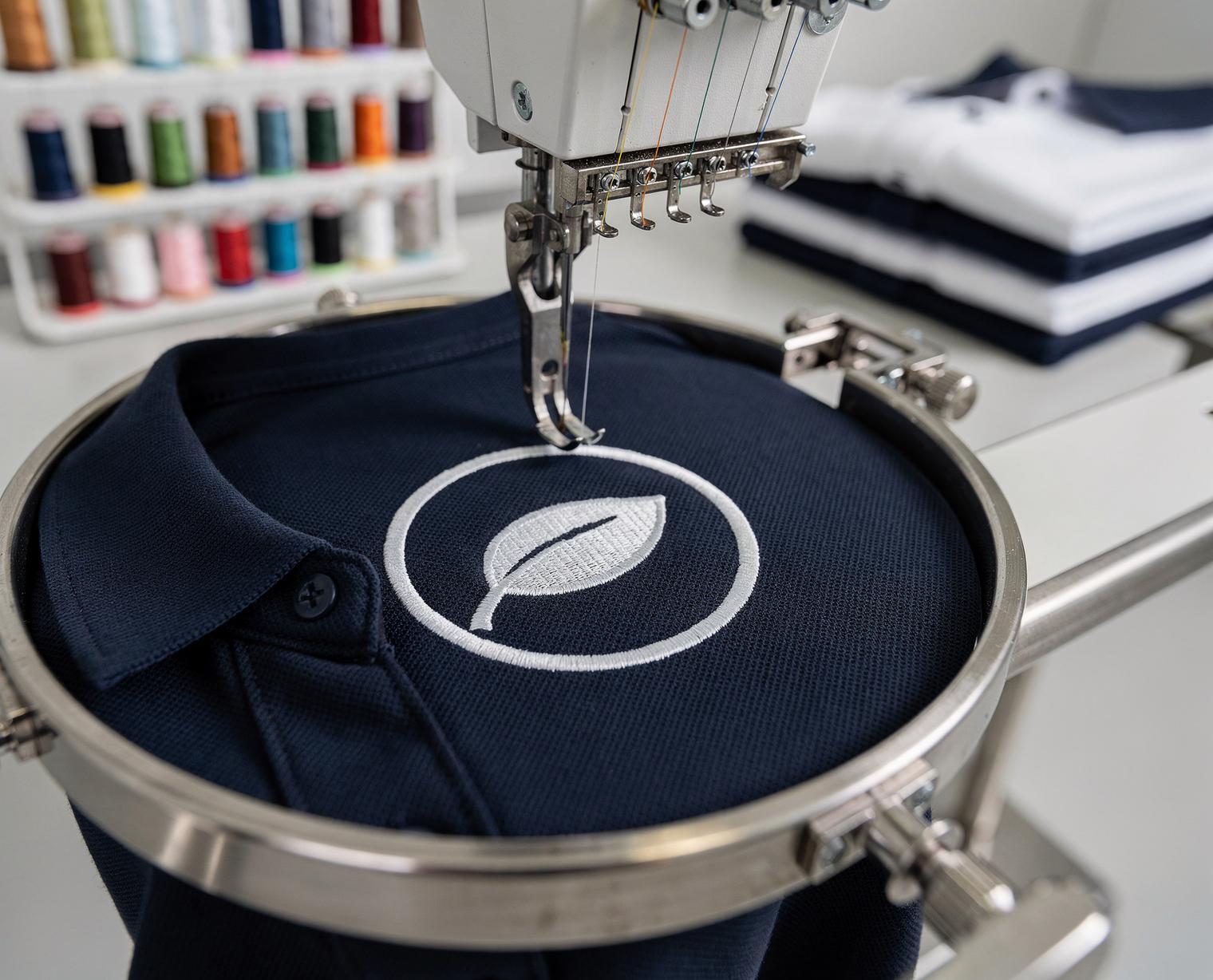
Table of contents
- The three ways to get branded uniforms
- Embroidery vs. heat transfer vs. emblems
- Choosing garments that survive industrial laundering
- Online uniform stores vs. getting work uniforms through a program
- Wearer turnover and reorders: the cost nobody budgets
- Keeping one brand look across locations
- What to ask a staff uniform company before you order
- How we handle branded uniforms
- Frequently asked questions
There are two practical ways to get custom logo work uniforms: buy decorated garments from an online store or local embroiderer when the apparel is light-duty and washed at home, or get branded garments through a uniform rental program when they are soiled every shift and need commercial laundering. Which route fits you depends on decisions that keep coming back after the first order. How the logo is applied decides whether it still looks sharp after a year of hot washes. Which garment you pick decides whether it survives industrial laundering at all. Where you order from decides what happens the week a new hire starts and the week an old one leaves. And if you run more than one location, every one of those choices has to hold across all of them. This guide works through each decision in the order you will actually meet it, and explains how we handle each one in the uniform programs we run across Ohio, Indiana and Northern Kentucky, with West Virginia confirmed case by case.
The three ways to get branded uniforms
Every option for custom logo work uniforms falls into one of three buckets, and the right one depends less on the logo than on who is going to wash the garments afterwards.
- Buy decorated garments from an online uniform store. You pick garments from a catalog, upload artwork, approve a digitized proof and receive finished pieces in a few weeks. You own the garments and you handle laundering, repairs, sizing and reorders yourself.
- Buy blank garments and use a local embroiderer or screen printer. More control over the shop doing the work, but the same ownership burden as above plus two vendors to coordinate.
- Get branded garments through a uniform rental program. The uniform company supplies the garments, applies the logo once, launders and inspects them weekly, repairs and replaces them, and adjusts the roster as staff change. You pay a weekly rate per wearer instead of buying inventory.
The first two routes make sense when the uniform is light-duty and rarely washed hard: a branded quarter-zip for a sales team, polos for a front desk. The third makes sense when garments get soiled every shift and need commercial laundering to come back presentable: kitchens, clinics, service trucks, plants. Most of the rest of this article is about the details that separate those two situations.
Embroidery vs. heat transfer vs. emblems
There are three common ways to put a logo on a work garment, and each trades off differently between appearance, cost and life in the wash.
| Method | How it works | Strengths | Watch out for |
|---|---|---|---|
| Direct embroidery | Your logo is digitized into a stitch file and sewn directly into the garment with polyester thread. | Most durable option through repeated hot washing and tumble drying; reads as premium; holds colour well and does not crack or peel. | Fine detail and gradients do not translate well; very small text turns to mush; needle penetration is a problem on waterproof shells and some FR garments. |
| Heat transfer / heat-applied vinyl | The logo is printed or cut onto a carrier film and bonded to the fabric with heat and pressure. | Handles full-colour, photographic or very detailed artwork; low cost per piece; fast. | Adhesive is the weak point. Standard transfers wear faster under commercial wash temperatures and chemistry, with edges lifting and cracking before the garment wears out. Reinforced industrial transfers are rated for far more cycles, so ask for the wash rating. |
| Sewn-on emblem (patch) | The logo is embroidered or woven onto a separate backing, then stitched onto the garment. | One emblem design works across every garment type; easy to move to a replacement garment; widely used in rental programs for that reason. | Slightly less integrated look than direct embroidery; you need to confirm the emblem thread and backing are rated for the wash process. |
For garments that will go through an industrial laundry every week, embroidery or a sewn emblem is the safer choice. Heat transfer has its place, but it is on garments laundered gently and infrequently, or on pieces with a short planned life such as event shirts. Even uniform retailers that offer every method describe embroidery as the preferred method for professional apparel and company uniforms, with heat transfer positioned as an alternative for detailed full-colour logos (Lands' End Business).
Getting the artwork right for thread
A logo designed for a website does not automatically work in thread. Before anyone digitizes it, simplify. Drop gradients and drop shadows, keep text large enough to stay legible in thread, and reduce the palette to a handful of thread colours that have a close match in the embroiderer's thread chart. Ask to see a sewn-out sample on the actual garment fabric rather than a screen mock-up: a logo that looks fine on a smooth polo can pucker on a lightweight scrub top or disappear into a textured chef coat. Decide placement once (left chest, sleeve, back, or a combination) and record the exact size and position, because you will need it to match later orders.
The FR exception
If any of your staff wear flame-resistant clothing, do not decorate it the way you would a polo. Manufacturers warn that non-FR patches, embroidery, silkscreens or heat transfers added after purchase may compromise the garment in a flash fire or arc flash exposure, should be avoided if possible, and if used must be no larger than a credit card (Ariat FR garment user guide). The safe route is FR-rated emblems applied by a supplier who understands the standard the garment was certified to. If that describes part of your workforce, say so at the start of any uniform conversation.
Choosing garments that survive industrial laundering
Commercial laundering is a different environment from a home washer. Water is hotter, chemistry is stronger, extraction is harder and drying is faster. Garments built for retail do not always cope. Points to check on any garment you intend to brand and launder commercially:
- Fabric. Polyester-cotton blends, the usual workwear choice, hold colour, resist shrinkage and release soil better than 100% cotton.
- Construction. Look for reinforced stress points, bar-tacked pockets, and buttons or snaps rated for commercial washing. On chef coats, the closure matters: the chef coats we supply run from plastic button to French knot.
- Colour stability. If your brand colour is critical, test it: ask for a garment to be run through several commercial wash cycles before you commit the whole roster to it.
- Finish. Garments with a soil-release or wrinkle-resistant finish come back from the laundry closer to new. Our restaurant uniforms are run through an automated steam process so they arrive crisp and ready to wear; that process rewards garments designed to take it.
- Logo compatibility. Make sure the decorator knows the garment will be laundered commercially. Thread, backing and stabilizer should all be specified for it.
In a rental program, this problem largely moves off your desk, because the launderer chooses garments for its own process. That is one of the quieter advantages of letting the company that washes the uniform also supply it.
Online uniform stores vs. getting work uniforms through a program
A common question from businesses buying work uniforms for the first time is some version of "why not just order them online?" For some teams that is the right answer.
| Factor | Buying branded garments online | Branded garments through a uniform program |
|---|---|---|
| Upfront cost | You buy the full inventory for every wearer, plus setup and per-piece decoration charges. | No garment purchase; a weekly rate per wearer that covers garment, laundering, repairs and normal-wear replacement. |
| Laundering | Employees wash at home. Appearance varies by household; soiled garments go home in cars. | Picked up and professionally laundered on a set day each week, returned sorted by wearer. |
| Repairs and replacement | Yours to notice, arrange and pay for. | Routine repairs (buttons, seams, snaps, hems) are normally included; worn garments are pulled before they look bad. Confirm terms in writing. |
| Adding a new hire | Reorder, wait for decoration and shipping, hope the garment and thread colours still match. | New employee is sized and added to the roster; garments come in with the same emblem spec as everyone else. |
| Someone leaves | Their branded garments are usually a loss. | Their sets are pulled and the weekly charge for them stops. |
| Hygiene documentation | None. | Depends on the provider; look for third-party certification of the wash process. |
| Best for | Light-duty, infrequently washed apparel; very small teams; items employees keep. | Garments soiled every shift; regulated environments; multiple locations; teams with turnover. |
Online stores have genuinely improved: Lands' End Business, for example, offers embroidery and direct-to-garment printing with no minimum order on its own-label garments, which solves the "one new hire" problem for a small office. What they cannot solve is everything after delivery. If your staff wear the uniform in a kitchen, a clinic or on a service call, the garment's life is decided on the wash floor, not at checkout.
We cover the economics of the two routes in more detail in our guide to uniform rental program cost vs. in-house, including how a weekly rotation (commonly 11 of each garment per wearer: five in the locker, five in the wash, one being worn) is built from each person's actual schedule.
Wearer turnover and reorders: the cost nobody budgets
Branded uniforms have a hidden cost that only shows up after the first order: people leave. In accommodation and food services, the quits rate ran at 3.5% in August 2026, the highest of any industry and well above the 1.9% rate across the economy, according to the U.S. Bureau of Labor Statistics. Health care ran at 2.0%. At those rates, a 30-person restaurant is sizing and outfitting a new employee most months, and the branded garments of the person who left are rarely reusable: wrong size, personalised, or simply never returned.
If you buy, build the reorder process before you need it. Keep the digitized logo file, thread colour codes, placement and size on record with the decorator, keep a few blank garments in common sizes on hand, and expect that a reorder of two shirts will carry setup and shipping costs out of proportion to the garments. If you rent, the program absorbs this: when you hire, the new employee is sized and added and the count goes up by exactly their rotation; when someone leaves, their sets come out and the charge stops. We maintain a sizing list per location and adjust it as staffing changes, so a reorder is a phone call rather than a project.
Keeping one brand look across locations
Logo drift between sites, where a restaurant group or multi-site medical practice ends up with three slightly different versions of the same uniform, happens for mundane reasons: one location ordered from a different decorator, a manager swapped the garment colour because the original was back-ordered, someone approved a slightly different digitization. Three ways to prevent it:
- Write a uniform standard. One document listing each role, the exact garment (style, colour, fabric), the emblem specification (size, placement, thread colours by code) and who can change it. Hold every location and every supplier to it.
- Use one logo file and one decorator. Digitization is interpretive; two shops will produce two slightly different logos from the same artwork. Keep a single approved stitch file and apply it in one place.
- Centralise ordering, localise delivery. One account, one standard, but a delivery schedule matched to each site's volume. In our programs for multi-location restaurant groups, logos are monogrammed consistently so a chef coat at the Indianapolis store matches the one in Cincinnati, while each store keeps its own sizing roster and route day.
What to ask a staff uniform company before you order
Whether you are comparing a national provider, a local embroiderer or a regional staff uniform company like us, the same questions sort out the surprises in advance. We put most of these in our guide to choosing a uniform rental company; the branding-specific ones are below.
- Is the logo embroidered directly or applied as an emblem? Is there a one-time setup or digitization charge, and a per-garment emblem charge?
- Can I see a sewn sample on the actual garment before the full run?
- What garments are available in my brand colour, and are they rated for your wash process?
- What happens to emblem charges when I add a new hire or swap a size?
- How are repairs, normal-wear replacement, and lost or damaged garments charged? Get it in writing: lost or unreturned garments are usually billed at a replacement price per piece, and that line should be in the quote, not discovered on an invoice.
- Is the laundering process certified by a third party? For healthcare garments, ask specifically about TRSA Hygienically Clean Healthcare and HLAC accreditation.
- Who do I call when something is wrong, and how fast do they answer?
A note on price shopping. A cheap uniform company that quotes a low weekly rate and then adds emblem, prep and other service charges is not cheap. Ask for every proposal with garment rates, service charges and replacement pricing as separate line items, and compare totals, not headline rates.
How we handle branded uniforms
We have been a family-owned linen and uniform service since 1931, and our approach to branding is shaped by the fact that we are also the ones laundering the garments every week. A few specifics:
- Logo options on restaurant and medical garments. All restaurant uniforms we provide come with the option of a monogrammed logo, and our scrubs, lab coats and medical apparel can be custom embroidered to your facility's requirements. We work with branding experts on the design side.
- Garments chosen for our process. From kitchen, server and host uniforms to work shirts and pants for field-service crews and HVAC technicians, we supply garments selected to go through our own laundering and finishing week after week.
- Roster management included. We size staff before the first order, maintain a sizing list per location and adjust it as people come and go. Our proprietary inventory software tracks garment counts and usage, and we review that data with you monthly so the program fits the team you actually have, not the one you had at signing.
- Itemised quotes. Every proposal lists garment rates, service charges and replacement pricing separately. If something on the bill is going to change, you hear it from us first. We wrote about why in No More Mystery Surcharges.
- Certified processing. Our facilities hold TRSA Hygienically Clean and TRSA Clean Green certification, and our Hospital Services operation has held accreditation since 2007 and is HLAC accredited today.
- Local routes. We have locations in Dayton, Cincinnati, Columbus, Zanesville and Indianapolis, with service across Ohio, Indiana and Northern Kentucky, and West Virginia coverage confirmed case by case. See our service areas for the full list.
If you want a quote on a branded uniform program, contact us with your headcount by role, your logo file and the colours you need to match. We will come back with an itemised proposal that lists garment rates, service charges and replacement pricing separately.
Frequently asked questions
Is embroidery or heat transfer better for work uniforms?
For garments that are washed commercially or washed often, embroidery (or a sewn-on embroidered emblem) lasts longer and keeps its appearance. Heat transfer suits detailed, full-colour logos on lightly worn apparel, but its adhesive degrades under commercial wash temperatures and chemistry.
Where can I order company uniforms for employees online?
Online uniform stores and corporate apparel sites will decorate garments from a catalog and ship them to you, some with no minimum order. That works for light-duty apparel you intend to own. For uniforms that are soiled every shift and need weekly commercial laundering, a uniform rental program that supplies branded garments and launders them is usually the better value, because it also covers repairs, replacement and roster changes.
How many uniforms does each employee need?
It depends on their schedule and how often the garments are laundered. A common rental rotation is 11 of each garment per wearer (five clean, five in the wash, one being worn) . Counts should be built from each person's actual shifts, not a flat number.
Can I keep the same logo across several locations?
Yes, if you use one approved digitized logo file, one decorator and one written uniform standard. In a single rental program covering all sites, logos are monogrammed to one specification, so garments match regardless of which location they are delivered to.
Can branded uniforms be put on flame-resistant garments?
Only with care. FR garment manufacturers warn that non-FR patches, embroidery or heat transfers can compromise protection, should be avoided if possible and, if used, kept no larger than a credit card. Use FR-rated emblems and a supplier who understands the certification the garment carries.
What does logo setup cost?
It varies by supplier. Expect a one-time digitization or setup charge for a new logo and a per-garment emblem or embroidery charge, with additional placements (sleeve, back) priced separately. Ask for all of these as line items in the quote and confirm how they apply when you add new hires.
Ready to get started?
Talk to our team and see how we can help.